Showing posts with label final fantasy tactics. Show all posts

15/09/2016

VGJUNK'S FAVOURITE GAMES

A very straightforward topic for today’s article: I’m going to write about some of my all-time favourite videogames. I get asked what my favourites are every now and then, and frankly right now I could do with some unalloyed positivity in my life, so here we are. No considered judgements or critical analyses in this one, folks, just the games I’ll take with me when I finally snap and head off to live in the woods. They’ve got electricity and broadband internet in the woods these days, right?

Silent Hill 2 (PS2, Konami, 2001)


In the admittedly very unlikely scenario that I was ordered, possibly at gunpoint, to rank all my favourite games, I would struggle from number two downwards to get them into any kind of order. However, for my number one slot there can be no other choice: it’d be Konami’s classic spook-em-up Silent Hill 2 every time and probably for all time. There are a lot of games I like, but there’s yet to be another that feels so perfectly me, like it was designed solely to provide the exact experience I wanted. What makes Silent Hill 2 so great? It might sound facetious but the answer is everything. It’s a game of rare depth and even rarer nuance, one of the very few video games from a major developer that tackles some truly heavy themes – suicide, euthanasia, child abuse – and handles them in a manner that’s heartbreakingly tragic and impressively non-exploitative.  Every aspect of its design, the characters, the graphics, the music and sound work, is pitch-perfect, creating the only videogame (well, apart from Soft and Cuddly) that’s managed to inspire a lasting feeling of dread in me. It’s assembled with such precision, craft and subtlety that every little detail of the game feels purposeful and redolent with meaning. On top of that, in Pyramid Head Silent Hill 2 produced one of the greatest monsters in any medium. A haunting mixture of the human and the abstract, Pyramid Head is unlike so many monsters in that it has a purpose beyond simple slaughter. It’s got something to teach you, and the idea that you might even be better off for knowing what that something is makes for a creature that’s more unsettling than any other.
As an aside, while there are plenty of reasons to dislike the Silent Hill movies (because they’re not very good, mostly,) the one thing that really annoys me about them is Pyramid Head’s redesign. By replacing the featureless geometry of the original’s “helmet” with a spiky, overly-fussy lump of metal, so much of what makes Pyramid Head unnerving is lost, and the movie version becomes yet another mindless murder machine with a head like a rejected trap design from a later movie in the Saw series.
Obviously every game on this list has earned its place in some part because of personal tastes that others might disagree with, but in Silent Hill 2's case I’d argue that there's not another game out there with such a consistent and expertly-crafted mood of melancholic horror, and as tiresome as the “are games art?” debate is I’d put forth Silent Hill 2 as the premier example of “yes, they bloody well can be.” Maybe one day Konami will reveal that their business decisions over the last few years have all been part of an elaborate hoax and they’re actually going to start making good games again, but until then I don’t think Silent Hill 2 is going to be topped.

Resident Evil 2 (PS1, Capcom, 1998)


While I was thinking about the games that would appear on this list, I realised that a lot of them would be standing in as a representative for their entire series, and nowhere is that more true than with Resident Evil 2. Picking a favourite entry from a franshise that has given me such consistent pleasure over the years was a difficult task, with the original Resident Evil, the Remake and Resident Evil 4 all making good cases for being the finest example of zombie-slaying, evil-pharmaceutical-company-fighting action available. I had to go with Resident Evil 2 in the end, though. If nothing else, the truck driver in the game’s intro who says “Dat guy’s a maniac! Why’d he bite me?!” would be enough to push me over the edge.
When I was finally lucky enough to get a Playstation and the original Resident Evil, it’s fair to say I became somewhat obsessed with it. It’s another game that feels as though it was made just for me, a B-movie in polygonal form with highly-trained police officers fighting against the undead, giant sharks and their own incompetence when it comes to spotting that their boss is the shiftiest man alive. I’m sure that somewhere in a dark corner of a wardrobe at my mother’s house there are still a few notebooks filled with terrible drawings of Jill fighting giant spiders and Wesker getting impaled by the ultimate bio-weapon, put it that way. So, when RE2 was announced, I was obviously very excited, but the excitement was tinged with trepidation – what if it wasn’t as good as the original? What if Capcom cocked it up somehow? Then RE2 arrived, and it was the exact opposite of disappointment. Is there an English word for “the exact opposite of disappointment”? I don’t think there is, so I propose we start using “Resident Evil 2” in those situations. “I opened a letter from the Inland Revenue, and it was a surprise tax refund! What a real Resident Evil 2 of a thing to happen!”
Anyway, RE2 takes the basic structure of the original and cranks everything up. Better graphics, a bigger world to explore, more puzzles and weapons, two playable characters with separate but intertwining storylines and more insanity. A good level of bonkers-ness, and the starting point for the series’ trip into the sheer madness of the later games. It’s the ideal sequel, in a way: everything you loved before, but more. A police station / art museum run by a mad taxidermist. The added tension of the relentless, Terminator-like “Mr. X” Tyrant. The introduction of series mainstays Leon and Claire. It’s all wonderful, and a rare example of a game where I can’t think of a single bad thing to say about it. Some people might complain about the voice acting, but without wanting to sound too harsh those people are wrong.

Final Fantasy Tactics (PS1, Squaresoft, 1998)


In hindsight, it was a bold move on Square’s part to follow up the incredible success of Final Fantasy VII with a sprite-based strategy game that eschewed the semi-futuristic aesthetic of FFVII and the upcoming FFVIII in favour of a traditional fantasy setting, but I’ll always be grateful that they did. I’ve played almost all of the Final Fantasy series, enjoyed most of them and outright loved a few, but Final Fantasy Tactics is always the one I return to time and again.
FFT is a three-pronged attack on my pleasure centres. First are the game’s mechanics. I always love a Job system, and FFT offers my favourite of the lot, allowing for a wide variety of customisation options for your characters. It’s not a game particularly concerned with balance, either, and there’s a huge array of completely game-breaking teams you can assemble. Want a character that shouts at themselves so much that they turn into The Flash and can run around the battlefield murdering everyone before the enemies can react? You can do that. I’m fond of giving people guns with a skill that prevents enemy movement, presumably by shooting them in the kneecaps. Or what about the only time I’ve ever enjoyed mathematics, but using the Calculator job class to pick targets based on god-damn prime numbers? I find being rewarded for figuring the intricacies of a game's systems t be very rewarding, and FFT offers that in spades.
Then there’s the story – it does descend into completely bananas “ancient evil gods” territory at the end, but which for the most part is an intriguing tale of political machinations, religious indoctrination and the unfair treatment of the poor by the ruling classes. Finally there’s the presentation, which is adorable. Tiny sprites absolutely packed with character and battlefield in a pleasingly chunky polygonal style, with possibly the best soundtrack in the series to boot. Add in all the secrets and hidden characters, including Final Fantasy VII’s Cloud being more useless then that time he was in a vegetative state, and you’d got a game that I can replay more than probably any other.

OutRun (Arcade, Sega, 1986)


I’ve already written a long and florid love-letter to Sega’s arcade racer, so I’ll keep this brief. OutRun is a game where you drive a car as far as you can, and it is perfect. At once completely relaxed and utterly precise, OutRun is about as close as you can get to driving down a beachside highway in a Ferrari without arranging a test-drive under false pretences. In fact it’s better than the real thing, because this way you can avoid human company, all while enjoying some of the best music ever to come out of an arcade cabinet. If you have a 3DS, I cannot recommend the 3D port of OutRun enough. Buy it, then play OutRun while sitting on a sunny beach. Now that’s living the dream.

OutRun 2006: Coast to Coast (PS2, Sumo Digital / Sega, 2006)


I had to split the OutRun series into two entries, because OutRun 2006 is such a different beast that its arcade forefather. It’s got all of the original’s atmosphere, though - the same sun-kissed beaches and winding mountain roads that serve as a playground for the sheer fun of driving, the same sense of escapism and the wonderful soundtrack. In my opinion, it’s also the single best example of a retro game being updated and enhanced for a modern (well, at the time,) console. The addition of drifting and the Heart Attack challenge mode keep things fresh, but without sacrificing the atmosphere that made OutRun such a joy to play. OutRun 2006 is one of those games that feel almost pure, somehow, and the simple act of playing the game is so much fun that even if it didn’t look and sound great it’d still be one of my favourite. You could be controlling a shopping trolley in a Tesco car-park and OutRun 2006’s game engine would still make it exciting as you pulled off a sick power-slide around a pensioner trying to reverse her Nissan Micra into a disabled bay.

Bloodborne (PS4, From Software, 2015)


There’s a stereotype about fans of From Software’s Souls games, and it’s that they’ll take the slightest opportunity to bang on at length about how it’s the greatest series of games ever created, and I’m here to tell you that such people do exist. I know because I’m one of them. Okay, so maybe I’m not quite that bad, and I can rein myself in when I see eyes glazing over, but the Souls games really are a phenomenal body of work. Any of them, Demon’s Souls and Dark Souls 1 – 3, could have made it on to this list but just edging them out for the position of my most cherished is Bloodborne - the one that sits most on the outside of that happy little group.
From’s blood-based Gothic masterpiece follows the template set by the rest of the series but goes off on its own unique tangent, the “medieval” fantasy setting replaced by a quasi-Victorian world of  mutated beasts and madmen, which is precisely the kind of universe that I long to soak myself in like a nice hot bath. The combat is the real star of the show: where one of the pleasure of the Dark Souls games is the wide variety of viable character builds, Bloodborne almost forces the player in operating as a nimble, aggressive, melee fighter. That might sound like a regressive step, but the combat is so finely-honed and responsive that playing the game that way is just so damn fun. A big part of this is down to the “regain” mechanic – when you take damage, there’s a short window where you can restore some of your lost health by slashing tasty, healing blood out of your opponents, encouraging you to get right up in their business. Couple that with the ability to parry enemy attacks not by pushing them aside with a shield, as in Dark Souls, but by shooting them in the face, and Bloodborne offers a masterclass in risk-reward gameplay.
Also exceptional is the world that the action inhabits. Personally I think it’s the best use of Lovecraftian horror that’s ever appeared in a videogame, a universe beset by madness-inducing star-gods and strange cults that worship monstrous blood. Reaching the point in the game where you gain enough wisdom to see what’s really going on in the city of Yharnam is a moment that will stay with me for a long time. It’s a beautiful game to look at, as well. Exquisitely hideous monsters roam the dark places of the world, and the architecture alone is worth the price of admission. Plus, and this is the criteria by which I judge all Dark Souls games, it has a fine array of goofy hats to wear, including a bucket with one eyehole cut out of it and a giant golden traffic cone.

Quake (PC, id Software, 1996)


Don’t get me wrong, Doom is amazing and I love it dearly but Quake is just that little bit more special to me. I can remember the first time I ever saw it, visiting a friend who had just installed the shareware version on his dad’s then brand-new Windows ‘95 machine. It was full 3D, man! And faster than a cheetah on a rollercoaster to boot! It blew my mind, and because there was no chance of me getting a computer powerful enough to run it at the time, I made damn sure I found out which of my other friends owned Quake, too.
I think I’ve said this before, but given how many alterations and compromises Quake went through during its development, from vast and complex RPG to Doom But Moreso and Brown, it’s amazing that it turned out as great as it did. Many people will tell you that Quake’s legacy is its huge part in the rise of online multiplayer, which is true, but I’ve never been much interested in that. Instead I preferred the world of offline play, the dank castles and Satanic ziggurats, the intense satisfaction of nailing an Ogre from around the corner with the bouncing projectiles of the grenade launcher. The inclusion of jumping and swimming leads to ever-more fiendishly hidden secrets, the atmosphere is so oppressive you could mistake it for the North Korea government and the action is never less than full-on heavy metal carnage, served completely without irony or pretence.

F-Zero GX (Amusement Vision / Sega / Nintendo, 2003)


The ultimate speed crazy dream extravaganza, a game so relentlessly, maniacally fast that all other racing games feel sluggish by comparison, and home to the most bizarre cast of characters this side of The Lesser Key of Solomon, F-Zero GX must surely be the result of Nintendo looking at their previous entries in the F-Zero series and saying “yes, but what if it was more? More of all of it?” And so we were blessed with F-Zero GX, the racing game to surpass all others so long as you’re not bothered about driving actual cars. It’s not a game that messes around: if you want to be good at F-Zero GX, it demands dedication and practise, but although it’s harsh it’s always fair. Okay, outside of the Story mode, anyway. That mode isn’t fair. On the higher difficulties, it’s actually a test the developers included to secretly gather data on just how much rage-fuelled punishment a GameCube controller can take. Other than that, though, F-Zero GX offers a racing experience focussed down to laser-like intensity that provides countless endorphin hits when you blast over the finish line just as your vehicle’s about to explode or as you deftly jink left and right to avoid the holes in the track. Sometimes you’ll get it wrong and fall off the track or have your racer explode, but in my experience it really is a game where practise makes perfect and one of the things I love most about F-Zero GX is that every time I play it I can feel myself getting better at it in tiny increments. Not enough to ever beat Story Mode on the top difficulty, but still.

Castlevania: Symphony of the Night (PS1, Konami, 1997)


I’ll be honest, when Symphony of the Night was first released I wasn’t that familiar with the Castlevania series. I’d played Super Castlevania IV and a little of the NES games, but it’s not like nowadays where I’ve played through them all multiple times, so as well as everything else I can praise Symphony of the Night for getting me into the rest of the series in a deeper way. Not that it requires any knowledge of the franchise to enjoy, because SotN takes the themes of the series and spins them into its own unique adventure. The half-vampire son of Dracula, fighting his way through a castle filled with all manner of monsters, spooks and reimagined characters from The Wizard of Oz? I’d have been sold on that no matter the license.
A game densely packed with secrets and obscure flourishes, (as I’ve written about before,) SotN marries the joy of exploring Dracula’s vast lair with tight controls and a wide range of weapons, equipment and special moves, each enemy you defeat bringing you closer to becoming an unstoppable death-dealing instrument of justice with fabulous hair. You can still find new things after dozens of playthroughs, the voice acting reaches a level of “so bad it’s good” that it transforms into the stuff of legend and Michiru Yamane’s soundtrack is utterly sublime. It’s a game that fair sings with quality, crafted with real passion, and is absolutely as much fun to play now as it was then.

Guitar Hero: Rocks the 80s (PS2, Harmonix, 2007)


Now that the series has been crushed beneath the weight of over-familiarity and a glut of spin-offs and expansions, it’s hard to remember that Guitar Hero was a genuine phenomenon. There are very few games I’ve ever seen – Tetris and early Wii stuff being other notable examples - that had such an effect when it came to getting people who didn’t play videogames interested. Everyone wanted to play Guitar Hero, regardless of whether they’d touched a videogame or a guitar before in their lives. The reasons for Guitar Hero’s appeal are obvious: everyone loves music, it’s simple to learn but difficult to master and despite knowing on a fundamental level that playing along on a chunky plastic guitar isn’t cool, it feels cool when you’re ripping through a Megadeth solo.
The Guitar Hero games hit at a perfect time for me personally, too. I was at university when they first appeared, and I have many fond memories of extremely well-lubricated pre-night-out Guitar Hero sessions. It also works as a good warning system for alcohol consumption: when you become unable to bash out a sloppy rendition of “18 and Life,” it’s probably time to switch to water. All the early Guitar Hero games are favourites of mine. I really enjoy Rock Band too, but there’s something about it that wasn’t quite as appealing as Guitar Hero. As sense that it wanted to be “cool,” maybe, a quality that Guitar Hero most definitely didn’t possess. So, why did I pick Rocks the 80s? Because it’s the one with “Holy Diver” in it, that’s why.

That's quite a selection of games, huh? However, I forgot to stop, and I've got another bunch of favourites to discuss. With that in mind, here's Part 2!

02/09/2016

EPHEMERA, VOLUME 10

Back once again – three small words guaranteed to get “Renegade Master” stuck in my head – with a fresh set of five miniature moments from a variety of games, it’s the return of the VGJunk Ephemera series! Yes, it’s another selection of inconsequential bits of game that make me say “nice” whenever I see them, or at least they would if I was in the habit of talking out loud to myself as I play videogames in my lonely shame-zone.
No-lem

When I wrote about the summons of Final Fantasy V, I mentioned that I’m fond of the Golem summon whenever he pops up, and I particularly like his appearance in Final Fantasy Tactics.


Here is the FFT version of Golem, looking like The Thing going through an awkward teenage phase. Even for something made of rocks, this Golem really looks like he’s made of rocks, as though the rabbi (or whatever the Ivalice equivalent of a rabbi is) who created this particular Golem was distracted half-way through the carving process. Just because he's taken the form of a fossilised mound of chicken nuggets doesn’t make him bad at his job, mind you, and when you summon the Golem your characters are still placed under his protection. This means that when a physical attack comes your way, the Golem’s hand appears and blocks it, and it looks like this.


It’s specifically this animation that makes FFT’s Golem my favourite. The satisfaction of your enemy’s attack being casually rebuffed is nice, but it’s the way you see them actually hit Golem and rebound from the impact that makes me like it enough to write about. I appreciate the surreality of the entire thing, too. There was no way that ninja was expecting, when he started swinging his blade, that a huge stone hand posed in the universal gesture for “no” would appear and take the hit.  Presumably the sudden jarring impact also dislocated the ninja’s shoulder, and the fact that the ninja doesn’t take any damage is a rare flaw in an otherwise excellent game.

An Abdominal Workout

Sticking with animations but moving on to Nintendo’s classic wet-slalom-em-up Wave Race 64, which is one of my favourite games on the Nintendo 64 and is still a lot of fun to play even now thanks to its sunny atmosphere and excellent water physics. One thing that Wave Race 64 lets the more confident / arrogant (delete as applicable) player do is perform tricks while they’re jet-skiing around the game’s courses, and my favourite of these stunts is flopping around in a circle on your stomach.


With the possible exception of some other straight sports games like Tennis, Wave Race 64 might be the most “realistic” game Nintendo have ever produced, and that’s why I love this animation so much – having played Nintendo’s other racing games, you might expect this spin to be flashier, to put the “buoyant” in flamboyant, but no. This looks exactly like a slippery person attempting an ill-judged trick in choppy seas, and there’s something about it that’s terribly charming to me. Maybe it’s the way the rider doesn’t react when they land and the jet-ski slams into their midriff, grimacing through the pain in an effort to look as cool as a person in a life vest can look. Who knows for sure? The heart truly is a mystery, but one thing is clear: the first thing I’ll be doing after I finish this article is playing Wave Race 64 and making my character spin around in an undignified as manner as possible.

Red-Hot Tag Team Action

Goldeneye was unarguably the king of multiplayer shooters on the Nintendo 64, and its reputation as host of the best four-player murder-fests only seems to grow with every passing year. It’s a position I can’t really argue against, not when I played so much Goldeneye multiplayer that I’m surprised every time I see Pierce Brosnan and his head isn’t shaped like an improperly-stored cereal box. However, one overlooked N64 shooter that I had a lot of fun with as a young person was Acclaim’s Turok: Rage Wars, a multiplayer-focused take on the “time-travelling Native American fights dinosaurs” franchise. It had a solid core married to some fun weapons and interesting game modes, like the one where players randomly turn into monkeys. Still, that wasn’t quite enough to keep me and my friends hooked, so in an example of what is now called “metagaming” but was known back then as “pissing about,” we came up with our own game mode.


One of the weapons in Rage Wars is a napalm launcher. I know it looks like a poor first draft of a robot caterpillar, but it’s actually a gun capable of firing sticky napalm bombs that can be detonated at the push of a button, like so.


With the power of the napalm gel in hand, we devised a new four-player game mode. One team of two has the napalm launchers, and covers each other in explosive gel. Their goal is to kill the other team of two as many times as possible, but only using the splash damage of the exploding napalm. Thus, Team Napalm has to get as close as possible to the other team, gradually whittling down their health with repeated detonations, while their targets try to stay out of their way. A lot of Rage Wars’ stages are quite small and constricted, so that’s easier said than done, and when you add in the frantic bickering of Team Napalm as they demand that their team-mates blow them up right this instant, c’mon, he’s trapped in a corner, it makes for a frantic experience. Each kill earns a point, the teams switch roles at the end of the game and whoever scores the most points after x amounts of matches is the winner. In this way, I think it’s safe to say we extracted maximum value from Turok: Rage Wars.
On a related note, I tried playing some of the game to capture the GIF above. The default control scheme is that the analog stick is for looking around and the C-buttons move your character, and years of playing more modern shooters meant my brain simply could not handle the functions of each stick being on opposite sides of the pad to what I’m used to. It would only be slightly hyperbolic to say that it threw me into a dimension of pure confusion where the laws that govern our human world held no dominion.

Bagsy Brazil

As strange as it might sound, there are some games you can play that don’t involve computers or consoles. Who knew, right? One such game is Subbuteo, the much-beloved tabletop recreation of football where the exciting soccer action is controlled by flicking plastic players with rounded bases around on a green blanket. I mean flicking in the literal, with your fingertips, sense. A cherished part of many a young football fan’s childhood, my own included, Subbuteo’s popularity meant that a computerised version was a certainty and so it came to pass in 1990 when Goliath Game released Subbuteo: The Computer Game on a variety of formats. While it loses the pleasure that the tactile nature of real Subbuteo offers, a computer game version does make some sense. You might not be able to find a willing Subbuteo parter, and if you did there’s a fifty-fifty chance they’re the kind of uncultured barbarian who ignores the rules and does nothing but blast shots towards goal from all over the pitch. There is a clearly marked shooting zone for a reason, you idiot. Playing Subbuteo on your computer also has the advantage that you know none of your players are going to be broken: the ankles of the plastic figures are notoriously fragile and, much like the ankles of West Ham striker Andy Carroll, will snap if so much as a gentle breeze caresses them. This isn’t about the game itself, though, but specifically the screen where you select the colour of your team’s kit.


As seen here in the Atari ST version of the game, your players are presented as though they were a box of real, physical Subbuteo figures, complete with styrofoam packaging and a goalkeeper on a stick who looks like he’s in the process of being robbed at gunpoint. For comparison, here’s what a real box of Subbuteo players looks like.


Without wanting to slip too deeply into wistful “when I were a lad” territory, there was always something slightly magical about seeing a Subbuteo team all boxed up like this, especially if it was some exotic and ultra-obscure team like Red Boys Differdange, or when you realised that Arsenal would make a perfectly good stand-in for Rotherham United. Looking at this kit-changing screen, I’m certain that whoever designed it felt exactly the same way.

Mocking Laughter

Finally for today, a musical interlude courtesy of Squaresoft’s SNES masterpiece Chrono Trigger. It’s got one of the best soundtracks on the system - one of the best soundtracks period, even – and here’s one tiny thing about it that’s hardly vital to its success but which I’m still very glad of. At one stage in the game, our plucky heroes engage in battle with grumpy wizard and potential party member Magus, and the fight gets its own special musical theme. The whole track is great, but I’m here for the laughter sound effect that plays during the song. You can hear it at about 1:02 in this video:


I don’t have anything insightful or clever to say about it, I just think it’s super neat. I know some people hear it as baleful sobbing, but it will always be laughter to me. My only question is who’s laughing? It’s got a certain dopey quality to it, so I doubt it’s Magus. I can’t imagine him haw-haw-hawing like a drunken hillbilly. Although, Magus does say “if my fate is to die, then I must simply laugh!” at one point, so maybe he’s secretly a much more chucklesome fellow than his dour demeanour suggests.
One of the reason that I think it’s laughter rather than weeping is that I’ve listened to the Brink of Time album, a collection of acid jazz Chrono Trigger remixes. Magus’ battle theme is covered on the album, complete with laughter.


You can hear it at about 47 seconds in, and while it’s (rather impressively) played on a guitar now that’s definitely a laugh. There you go then. Case closed. Chrono Trigger is a game that laughs at those who play it. That’s fine by me, frankly. I’ve had so many happy hours playing Chrono Trigger that it could steal my girlfriend and slap my mother and I’d still love it.

08/03/2015

EPHEMERA, VOLUME 9

In an effort to prevent this past week from being a total bust in terms of creative output - all I've produced so far since the last article is enfeebled whinging and a worrying amount of phlegm - here's the latest entry in the VGJunk Ephemera series. That's where I write about five little gaming moments that aren't enough to support whole articles on their own, but which I think about more than perhaps they deserve. Let's get right into it, shall we?

I Guess You Can Take It With You

World Heroes 2, the fighting game starring loosely re-imagined versions of historical figures such as Joan of Arc, Rasputin and, erm, Bruce Lee, also has a stage that features a pirate skeleton sitting on a pile of presumably ill-gotten booty.


It's such a fabulous hoard that even the treasure chest is made out of gold, which speaks to a level of extravagance not usually seen outside the homes of the most insanely wealthy sheiks. It didn't do this skeletal swashbuckler much good, though, and his animated bones must spend an eternity guarding his loot. This vignette in itself is enough to capture my interest - my love of skeletons has been well-documented by this point, and this particular skeleton even has a pirate hat and a hook for a hand - but there's something more to it. I think it's that hand motion, it makes it look like he's fanning his flustered skull as he watches the two warriors in front of him do battle. "Oh, you silly boys," he seems to be saying, "I do hope you're not fighting over little old me." Well, he's been down in this cave for god knows how long, it's bound to send anyone a little peculiar.

Bad Medicine


Shining Force II is an RPG, with the usual RPG battles between good and evil. The forces of good are a hardy bunch of warriors, but sometimes their commander might, I dunno, misjudge how far an enemy unit can move, leaving them exposed and susceptible to a beating. Hey, it's easy to forget how far the mobile ballistas can move each turn, okay? Not to worry, there are magic healing spells available that will fix them right up.


See? These medically-trained Tinkerbells flutter in, dispense some invigorating fairy dust to revive and replenish a battle-weary fighter and then flap off again, back to Yon Nurses' Station of the Faerie-Folke until someone else is willing to cough up the MP needed to summon them. This is not a service that is limited to the good guys, either, and certain enemy troops can cast healing magic too. They don't get tiny fairies tending to their wounds, mind you.


No, they have micro-devils instead, miniature succubi who perform the same job but, you know, evil. It's such a lovely little touch, and one that makes sense: I can't imagine fairies wanting to heal someone called the Dark Bishop. The Dark Bishop does not sound like someone whose goals would align with those of the gentle forest spirits. The Dark Bishop sounds like someone who would wear a ridiculous hat, and whaddya know! Seriously, that can't be comfortable on his ears. Just get one a couple of sizes smaller!

A Quick Breakfast

Speaking of spells, Playstation classic and firm VGJunk favourite Final Fantasy Tactics has spells! Lots of spells, including one that, yes, heals people with fairies. Fairies are the morphine of any fantasy kingdom worth its salt, it seems, but this is about a different spell. Sometimes when you cast a spell in Final Fantasy Tactics, your character will recite a short incantation. Unless you're playing the PSP re-release of FFT, because the spell quotes were removed from that version. Anyway, here's the quote for the spell Haste.


Layer upon layer of what, exactly? Time? Speed? Light, silken undergarments whose pleasurable caress encourages the wearer to move around more rapidly? I have no idea, but what I do know is that this quote always makes me think of breakfast. You see, when I was a youth the place I heard the phrase "layer upon layer" more than any other was in this TV commercial for the cereal Shreddies.


"Layer upon layer of whole wheat," the advert says, and so every single time I see the Haste quote from FFT my brain automatically summons up the memory of this '90s cereal advert, or at least that one line - I had forgotten all about the stuff with Romeo and Juliet and the Leslie Phillips-esque blue hunger gremlin. Poor hunger gremlin, everyone wanting to lock him away just because he was performing a necessary human function. Anyway, that's how Final Fantasy Tactics and Shreddies are forever intertwined in my mind. I can't believe I'm explaining this to people.

Jennifer Should Shower, Then

Splatterhouse 3 is a horror game, and usually it sticks to some fairly common videogame methods of horrifying the player.


Things like freaks in hockey masks, headless ghouls, bodily fluids in a wide range of exciting colours, that kind of thing. Did I mention it takes place in a spooky mansion, too? Because it does. That's why it's called Splatterhouse, because you're in a house that you're splattering with those colourful monster juices. As an aesthetic, it's pretty great. I certainly love it, that "oozing from the VHS cover of a horror movie" look, but Splatterhouse 3 has the occasional moment that offers a different, less obvious form of terror. I'm thinking specifically of this line from one of the game's intermissions.


It's just so weird, a startlingly effective evocation of the horrible things that are happening to Jennifer, made stranger by the slightly off-kilter delivery. How do we know that she's beginning to smell of the grave? Did Jennifer catch her own scent, the subtle (for Splatterhouse, at least) change letting her know that something is very wrong? Splatterhouse 3 is timed and a terrible fate will befall Jennifer if you don't get to her quickly enough, and while I'm on the fence about being timed as a gameplay mechanic these scenes add a real sense of tension to Rick's rampage through the mansion. In a series that I've often thought succeeds more at creating an fantastic atmosphere rather than at being a truly great game, this is one of the most atmospheric moments of them all.

It's an Acronym for Rude, Young and Unimpressed

Street Fighter Alpha now, and when I wrote about Street Fighter characters the other week I said that Ryu is possibly the blandest man ever to fight a karate demon and shoot fire out of his hands. I'm still sticking by that, but his ending in Street Fighter Alpha shows a slightly different side to his character - a cocky and frankly rather rude side. After being challenged to a rematch by Sagat, Ryu defeats the Emperor of Muay Thai once again, leaving Sagat humiliated. Ryu reacts in a way that you might describe as being a touch graceless.


C'mon, Ryu, don't just ignore him! There's no need to be impolite, even if the accompanying picture shows that Ryu is clearly staring right at Sagat and not ignoring him at all. Maybe it's just a bit of miscommunication: Ryu isn't ignoring Sagat, he's just not rising to his threats.


Okay, nope, Ryu is just being a bit of a dick. No-one likes a sore winner, kid. I think we can chalk this one up to youthful hot-headedness - Street Fighter Alpha being early in the SF chronology, of course. Still, in a way it's nice to see Ryu talking about something other than honourable combat and discovering the true path of the warrior for a change. Sagat probably doesn't think so, though.

16/05/2011

QUEEN REFERENCES IN VIDEOGAMES

If the fact that I run a website that consists of me rambling on about them hasn't clued you in, I love videogames. I also love the music Britain's premier classic rock band, the incomparable Queen. And do you know who else loves videogames and Queen? The Japanese. Queen were pretty successful in Japan, and some of that success translated into the greatest compliment a band can receive: a reference or two in a videogame! So, here's a look at some of Queen's appearances in the wild world of digital entertainment.

Ogre Battle series

Quest's series of strategy RPGs goes all-out with the Queen reference, and names the entire series after the song of the same name from the album Queen II. That's fine by me, it's a great song. However, the designer of Ogre Battle, Yasumi Matsuno, obviously decided that he was such a big Queen fan that one reference in the title wasn't enough, so he gave it the subtitle The March of the Black Queen. "The March of the Black Queen" is another song on the Queen II album.

Matsuno wasn't done there, though: the next game in the series, the Final Fantasy Tactics­-style Tactics Ogre, it was given the subtitle "Let Us Cling Together". "Teo Torriatte" is a track from Queen's 1976 album A Day at the Races, and it's unusual for being partly sung in Japanese. "Teo Torriatte" was translated (rather wonderfully, if you ask me) as "Let us cling together". So there you have it: Queen and Ogre Battle, together in perfect harmony. There's even an area in Ogre Battle called the Rhyan Sea, named for the song "Seven Seas of Rhye".

Final Fantasy Tactics

One of my all-time favourite games, Final Fantasy Tactics gets a little extra sparkle from the fact that the fourth chapter of the game is entitled "Somebody to Love" in reference to the song of the same name that appears on the album A Day at the Races. You might be thinking "hey, the phrase 'somebody to love' is common enough that it isn't necessarily a Queen reference", and normally I'd agree with you; however, when you take into consideration the fact that FFT was directed by none other than Ogre Battle creator Yasumi Matsuno then, well, I think it's pretty much a definite.

Highlander

Not really an appearance by Queen as such, but the Highlander game that was produced for the home computers in 1986 featured a rather nice chiptune version of "A Kind of Magic" (well, the Commodore 64 version did, at least). Here, have a listen:


Was the game itself any good? Well, I've never played it, but by all accounts it's pretty terrible. Then again, it was a movie tie-in made by Ocean in the mid-eighties, so what did you expect?

Street Fighter series

First of all, that's boxing champion and all round classy English gentleman Dudley up there, sporting one of his alternate costumes from Super Street Fighter IV. It's quite clearly modelled on Freddie Mercury's iconic stage outfit from Queen's 1986 appearance at Wembley Stadium:

A great choice of Capcom's part, I must say. Still, that's not Street Fighter's only claim to a Queen connection. Here's Eagle, one of your opponents from the original Street Fighter.
He's a British bouncer and possible MI6 agent who (along with Birdie) is named after a golfing term. Originally, he seem to have been inspired by the bodyguard character from the Bruce Lee film Chinese Connection / Fist of Fury:


And then Eagle disappeared for fourteen years or so, until he reappeared as a playable character in Capcom vs SNK 2. However, he'd undergone a few changes, and he appeared to be turning into something of a Freddy Mercury impersonator. There are the physical aspects of his Mercury-dom, like his (admittedly not black) slicked-back hair and moustache. Then there's the fact that some of his win quotes, particularly in the Japanese version of CvS2, seem to imply that Eagle is gay - for example, after beating Cammy he tells her that he's "not interested in young ladies". Freddy Mercury was certainly bisexual (at least), so that's something else they have in common.

The real clincher is some of Eagle's in-battle voice clips. His taunt has him saying "No time for losers", which is a line from Queen's anthemic "We Are The Champions", and he also says "the show must go on" after winning. "The Show Must Go On" is a track from Queen's 1991 album Innuendo.

Guilty Gear series

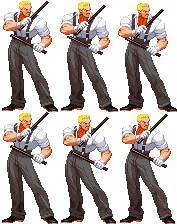
Oh boy, we've hit the motherlode here. Guilty Gear is famous for being crammed full of nods to music in general and heavy metal in particular, with the name of pretty much every character and special move being a reference to some band or other. Queen is the big one, though: series creator Daisuke Ishiwatari is a huge Queen fan, and boy does it show. Pictured above is Sol Badguy, the main character of Guilty Gear and a walking bundle of Queen references. Sol's favourite activity, as listed on his character bio? Listening to Queen, particularly their Sheer Heart Attack album. His headband carries the phrase "Rock You", as in "We Will Rock You". His theme music is called "Keep Yourself Alive", which is the title of Queen's first ever single. His real name? Frederick, and his nickname is taken from Freddy Mercury's solo album Mr. Bad Guy.

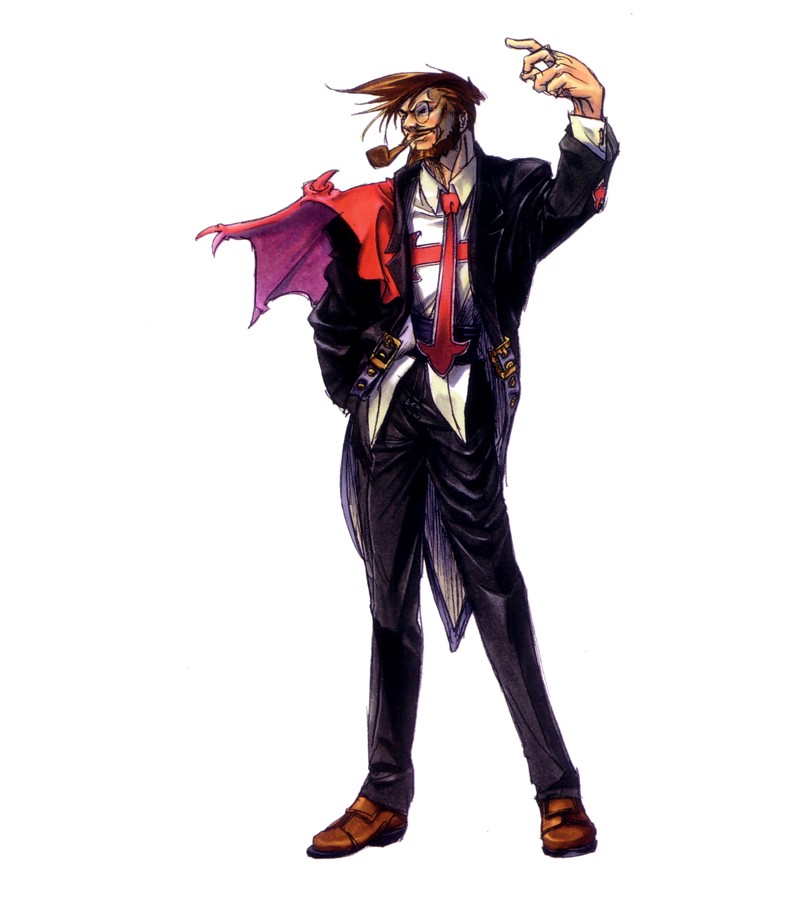
Then there's vampire badass Slayer. He's named after the metal band of the same name, but most of his special moves - All Dead, Dead on Time, Under Pressure - share their name with Queen songs.
In fact, you could argue that all four members of Queen are represented in Guilty Gear. There's Sol "Frederick" Badguy for Freddie Mercury, May for Brian May (sorry, Dr. Brian May CBE), Johnny for John Deacon and Roger (Bridget's creepy teddybear thing) for Roger Taylor.

And that's Queen, in videogame form. Freddy might have sadly passed on, but it's nice to think that his spirit lives on in a giant dude with a fiery sword. I'm sure there's some little Queen-related videogame moments that I've missed, so if you can think of any that I've misses then please, drop me a note in the comments.

VGJUNK Archive

Search This Blog

Followers